Most organisations I meet are in the same position.
One or two people are doing impressive things with AI, everyone else is somewhere between curious and wary, and leadership can see the promise without seeing how it adds up. My job is to turn that into something that compounds.
I work with grantmakers, education organisations and operators across Africa, South Asia and the US. Before consulting I spent fifteen years building and running education technology, so I have usually sat on the other side of the table from the person I'm advising.
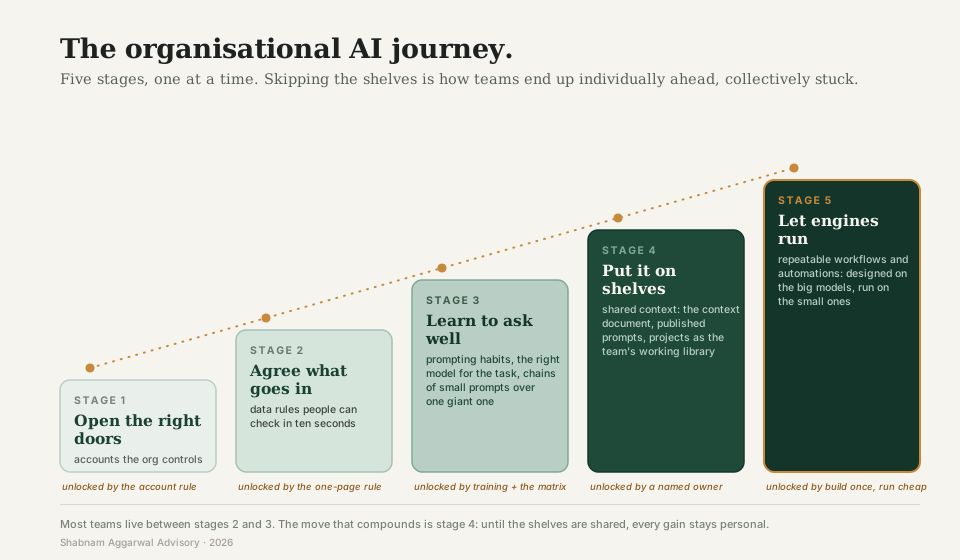
The organisational AI journey.
Every engagement starts by placing the team on this map. Five stages, one at a time; everything below is in service of moving along it.
Five kinds of work.
Where AI fits
A clear read on where AI helps your model most, and agreement on the few things worth doing first. Usually the highest-value piece, and usually the one that gets skipped.
Policy and responsible use
Data rules people can actually follow, a position on which tools are allowed and why, and practical checks against bias and over-trust in what the tools produce.
Shared foundations
The connective work that stops good individual builds from staying stranded on individual laptops. Written up in detail in the working brief.
Bringing the team along
Training and enablement pitched at the people who aren't living in these tools, because a rollout that only works for the enthusiasts hasn't worked.
Investment and proposal review
Reading a grantee's proposal, budget or technical plan and telling a funder plainly whether it holds up, what's missing, and what to fix before signing.
Options, and what I'd do.
You decide
I bring options with what I like and what I'd watch for on each, then a recommendation. The decision stays with your team, because they're the ones living with it.
The people who aren't superusers
Anything that only works for the heaviest users hasn't worked. I design for the middle and the edges of a team.
Capability that stays
By design you need me less over time. Every workflow we build together is yours to keep and run.
I say what I couldn't check
Where evidence is thin or I'm working from a partial picture, I mark it. It's the only way the confident parts are worth anything.
Written down.
The shared foundation
How a small organisation gets its AI work to compound when everyone already uses a different tool. The architecture, the six habits it needs, and the five ways it goes wrong.
Which Claude, when?
An interactive decision matrix for choosing the right AI model for the task, built for teams whose best users keep hitting their usage limits by Wednesday.
Things I've built and shared
Small tools I've made for my own practice and released for anyone to use.
Start with a conversation.
If you're weighing up where to start, or you have a specific piece of work in mind, I'm happy to talk it through before anyone commits to anything. aggarwal.shabnam@gmail.com