Where is your team on the journey?
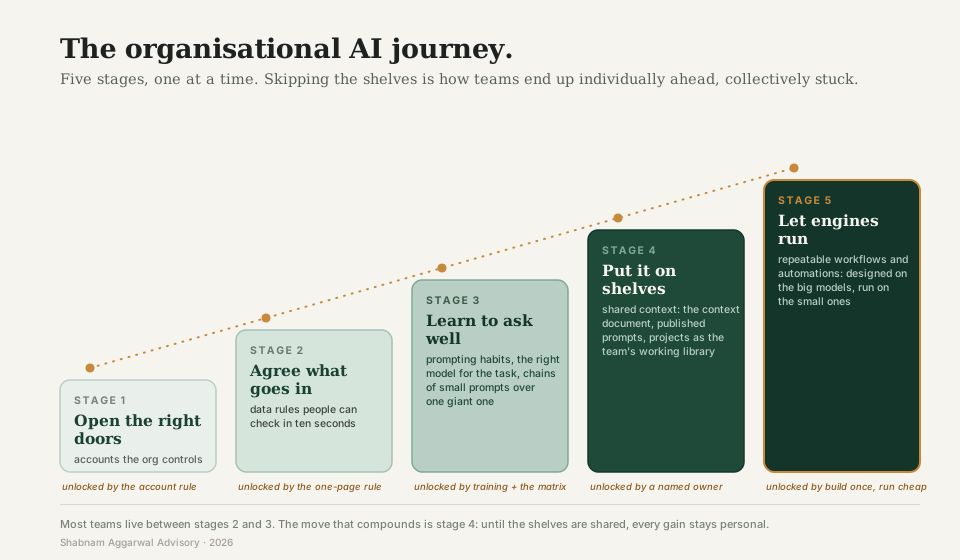
Five stages, one at a time. Find yours, then pick up the tools tagged for it. The stage-agnostic pieces apply everywhere. Stages 1, 2 and 4 are covered in depth in the shared-foundation brief.
Start here, whoever you are.
The context document
Eight fields that turn generic AI output into output that sounds like your organisation. The first thing any team should build, and the cheapest.
EVERY STAGEWhich Claude, when?
The model decision matrix, the interactive helper, the seven habits, and the ready-to-paste organization instructions block for admins.
Getting started.
For teams choosing tools and agreeing what may go into them.
The tool-selection rubric
System fit, the four account checks (org-controlled, no training on your data, visibility, retention), and how to run two tools in parallel while you decide.
The data traffic-light one-pager
Red, yellow, green classes for your data, with examples, so "can I put this in there" takes ten seconds to answer instead of a meeting.
The team diagnostic
The baseline survey: fluency spread, account reality, data comfort, and the wish list. Run it before choosing anything.
Getting better.
For teams with tools and rules in place, working on efficiency, shared context, and automation.
The prompt-chaining primer
Four small prompts beat one giant one: extract, compare, summarize, draft. And chains let you mix models per step, the micro version of build-expensive-run-cheap.
Projects as the team library
Shared projects as org memory: what goes in knowledge (slow-changing, owner-refreshed) vs what stays live via connectors, including the shared-project Drive workaround.
The efficiency metric
Track the mix, not the person: share of tokens on Sonnet or below, month-over-month improvement, a usage floor, and an award your heaviest builder can still win.
Build-once-run-cheap patterns
Worked examples of designing a workflow on the big models and handing the running of it to the small ones: report intake, doc chasing, dashboard refresh.
Working versions, shared with clients as they firm up. Everything here grew out of client engagements. Questions or a piece you need sooner: aggarwal.shabnam@gmail.com